

Research Results
We publish the full documentation of every research project and citizens' assembly we run — the background materials, the methodology and the results alike. Without this, no one could hold us accountable for anything.
Why we publish it
A participatory process is only worth as much as it is verifiable. If we shared only the outcome, you would simply have to trust that we did it well. We publish the research reports, the methodology and the results that can be made public. For more detailed, anonymised research data we can provide access on an individual request, subject to data-protection and research-ethics considerations.
The documents are free to download and cite, with attribution.
The 2025 process
A complete participatory process, in three stages
From the baseline research through the preparation day to the citizens' assembly — plus the executive summary that ties the process together.
Stage 1 — Baseline research · July 2025
BP18 Complex Hybrid Research
The process began with a comprehensive baseline study combining quantitative and qualitative methods. The online survey of 1,666 people, the analysis broken down by the district's four sub-areas, and the focus-group studies together drew the citizens' assembly's initial social baseline.
Stage 2 — Preparation · 27 September 2025
Pre-Citizens' Assembly — education day
Before the assembly we held a full-day preparation event for the participants: three thematic blocks and a map-based group exercise helped everyone arrive well informed. Participants rated the day 4.8 / 5.
Stage 3 — Delivery · 11–12 October 2025
2nd Citizens' Assembly
Over the planning weekend, 45 participants working in five colour-coded teams developed 15 proposals. The main topics: transport, public safety and green spaces.
2026
3rd Citizens' Assembly
The process continued in 2026 as well, with a new topic and a new venue.
The assembly held on 16–17 May 2026 focused on the community, cultural, green-space, recreational and participatory role of the Bókay-kert. 42 district residents worked in five small groups.
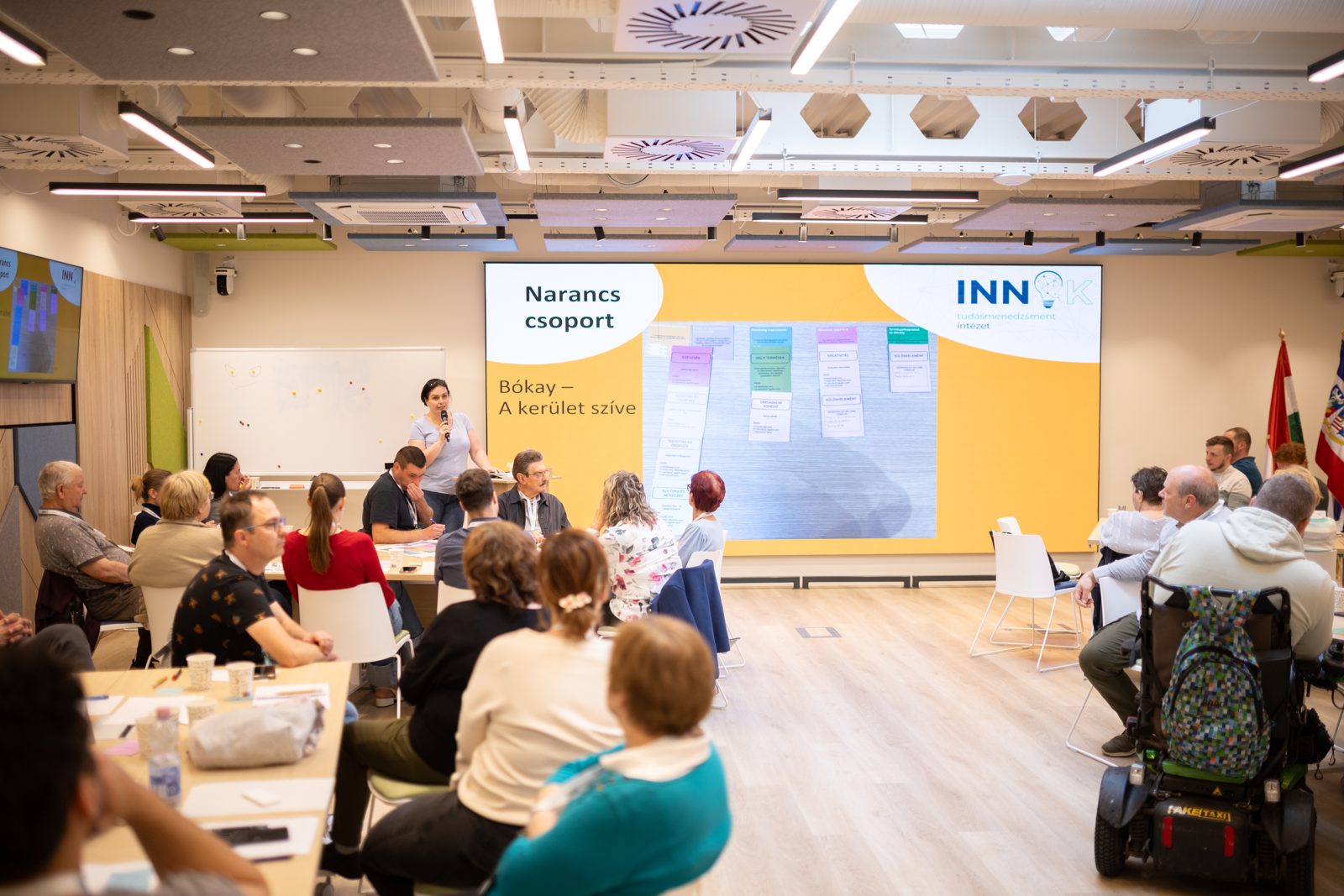
2026
4th Community Meeting
The most recent stage of the process — with a video summary.
On 3–4 October 2026, the 18th district's residents who took part in the citizens' assembly spent two days exploring the district's cycling development — centred on turning the route of the former "Burma railway" into a cycling and green corridor, weighing three design variants.
Would you like to cite it?
The documents are free to cite with attribution. If you need more detailed, raw data for research purposes, write to kozosseg@urbanlab.hu — if data protection allows, we can share it.
Research on other topics?
For urban-development and social-innovation research, take a look at Urban Lab, and for methodology and knowledge-base materials, at Living Lab.