
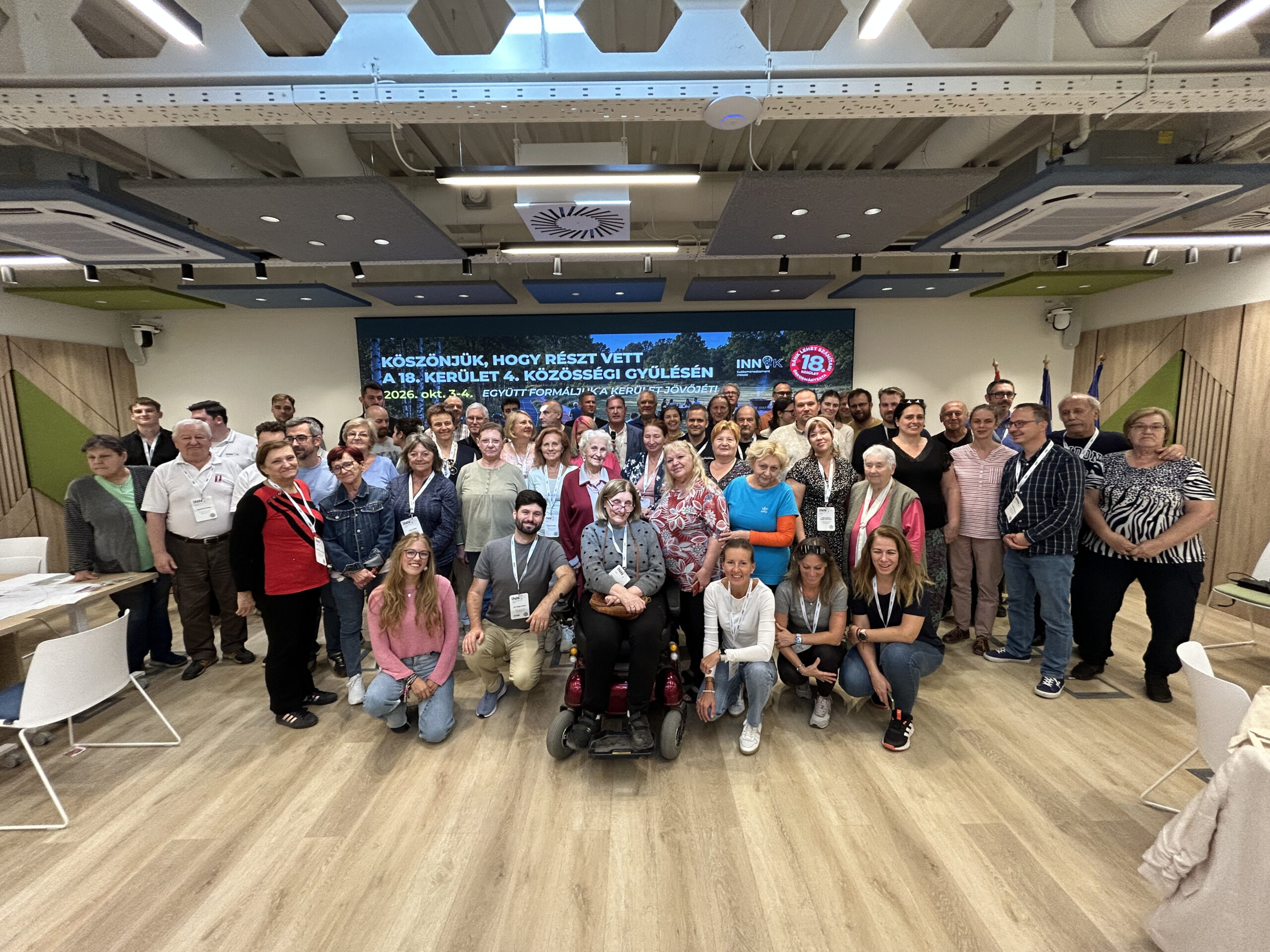
Citizens' Assembly (4.)
The 4th citizens' assembly has concluded: residents deliberated on the cycling future of the 18th district
On 3–4 October 2026, the 18th district's residents who took part in the citizens' assembly spent two days exploring the district's cycling development — centred on turning the route of the former "Burma railway" into a cycling and green corridor, weighing three design variants.
On 3–4 October 2026 we held the 18th district's 4th citizens' assembly. The participants, selected by stratified random draw, spent a weekend working in teams on the district's cycling development — specifically, how the route of the former "Burma railway" line should be renewed as a cycling and green corridor. The assembly closed with a thorough deliberation of the three design variants presented and a final vote.
01 What was the assembly about?
A citizens' assembly always addresses a concrete question that affects everyday life in the district. This time the topic was the development of the district's cycling network: above all, turning the route of the former local railway line, the "Burma railway", into a cycle path and green corridor. The experts prepared three detailed design variants (A, B and C) — differing in the width of the route, the separate footpath, the rest areas and the treatment of intersections.
There was also talk of the creation of the Civic Lab website as a tool for community involvement — one of InnoK's three main pillars. In the future this platform will help by providing background materials and facilitating community involvement, so that residents of District XVIII can have a say on important questions.
02 The first day — learning and practice
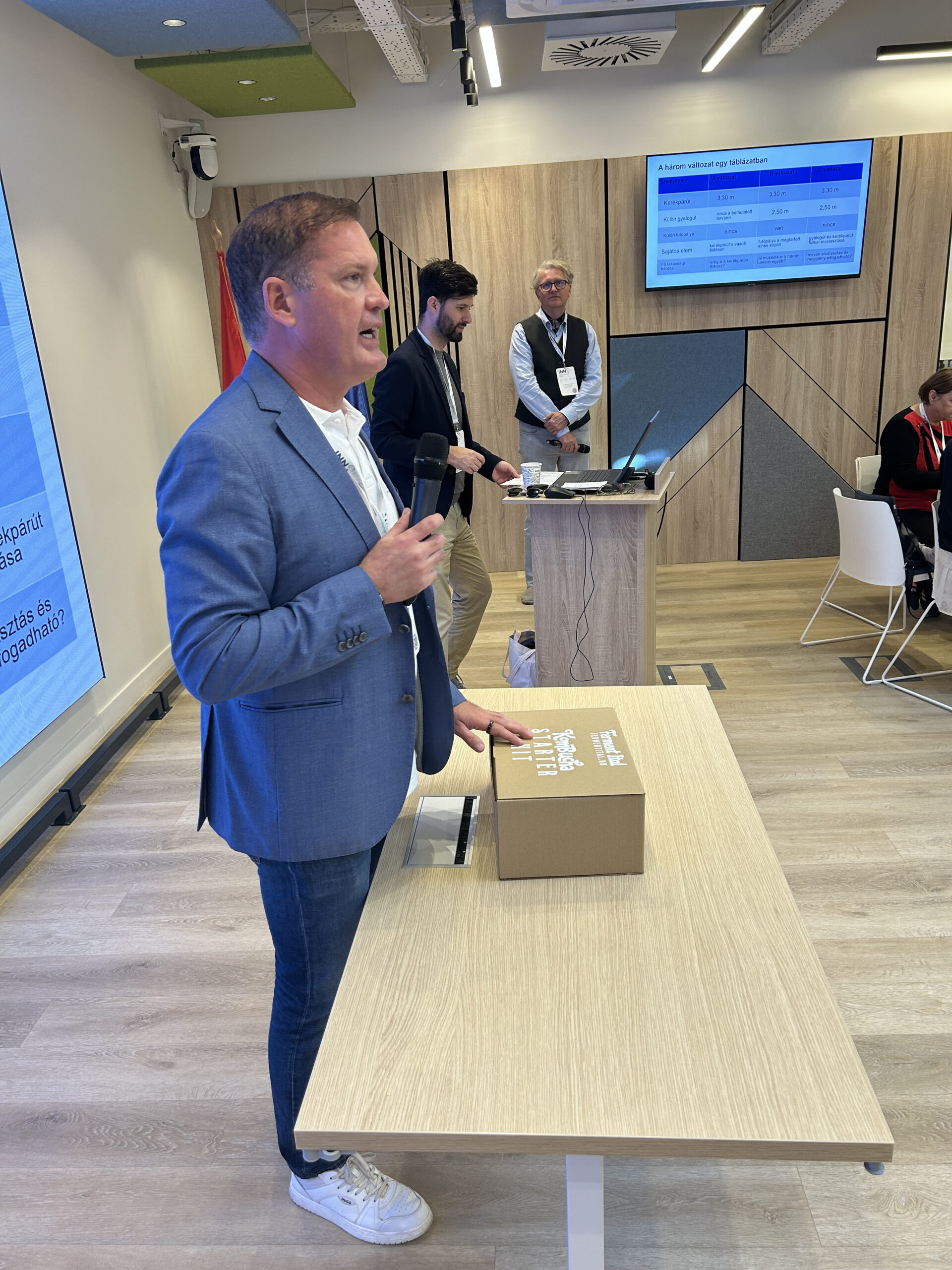
Saturday was about building knowledge together. The participants were greeted by Rónavári-Kedves László, director of InnoK, while the opening address and the report on the proposals of the 3rd citizens' assembly were given by deputy mayor Somody László. The cycling vision was outlined by city manager Komáromi Zoltán in his talk "A green and safe cycling future in the 18th district", after which civiclab.hu introduced itself as well.
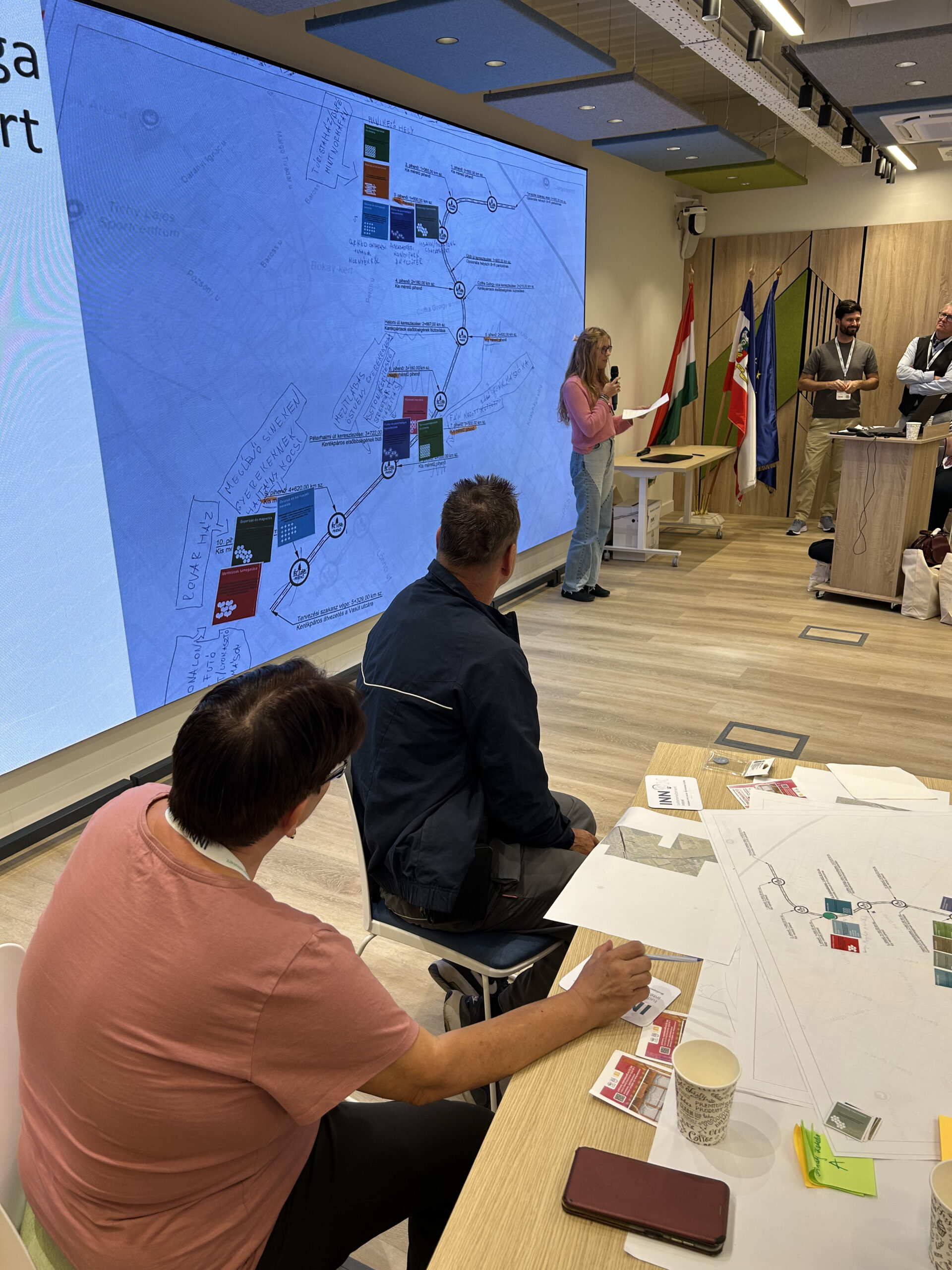
During the day there was talk of the past of the district and the "Burma railway" (with a playful quiz), of international good practices in cycling, and of the current state of cycling in the 18th district. In the afternoon, in the traffic-education park behind the Town Hall, participants tried out traffic situations in practice, and finally explored the district's cycling problems in a map-based group exercise.
03 The second day — deliberation and voting
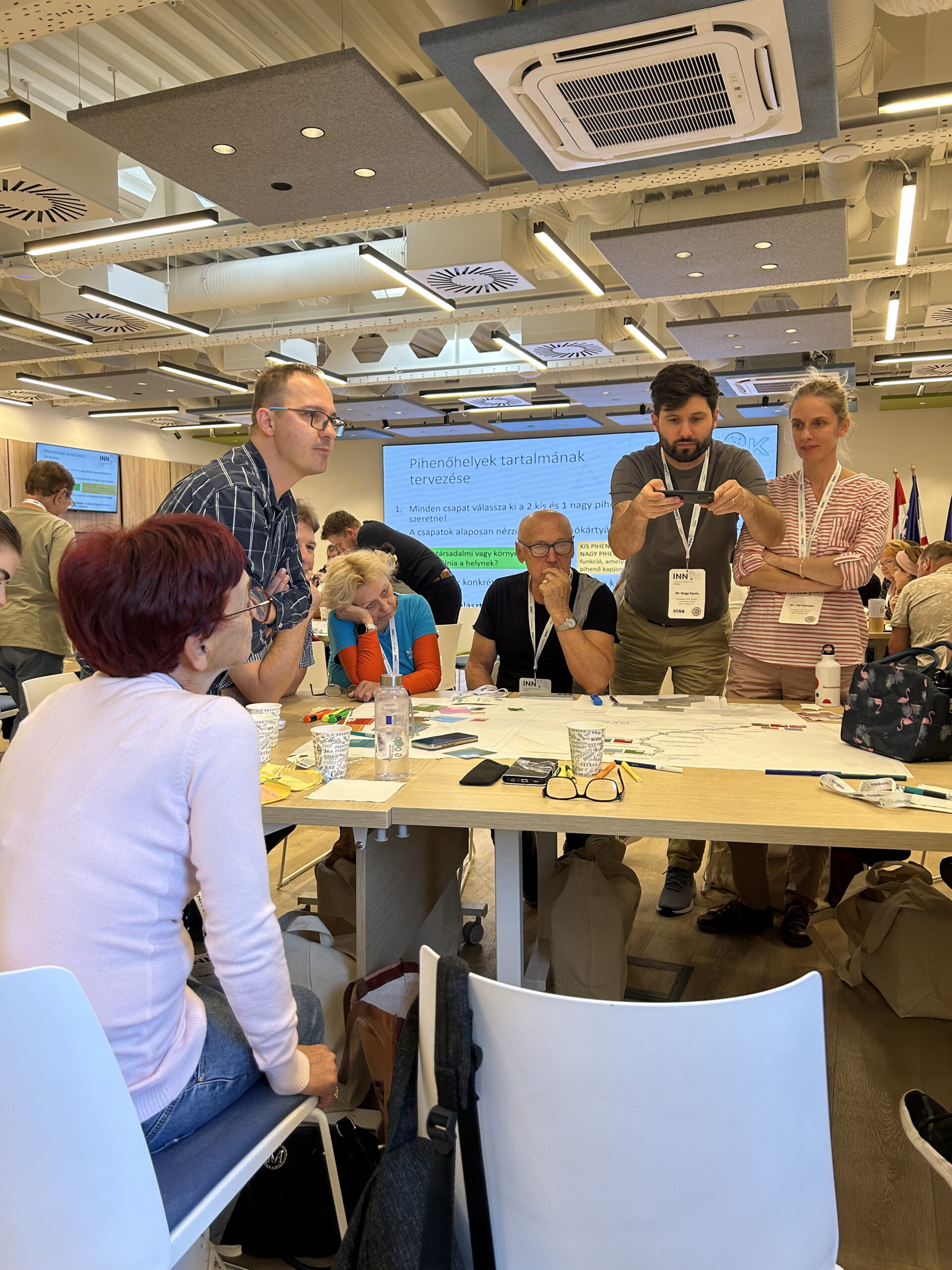
Sunday was about preparing the decision. After a detailed presentation of the three design variants, participants deliberated in small teams, in three steps: first they chose the variant closest to them ("Validation I." programme element), then systematically collected the problem points ("What doesn't work?" programme element), and finally worked out concrete improvement and development proposals ("How could it be better?" programme element) — drawing on the international examples, their knowledge of the traffic rules and the district problem map.
The assembly ended with a vote: participants cast their ballots into a ballot box, and the weekend closed with the ceremonial announcement of the result. The detailed results and the groups' recommendations will be published together with the assembly report.
The assembly's details
- 3–4 October 2026 — a two-day citizens' assembly
- Venue: the Pestszentlőrinc-Pestszentimrei Mayor's Office, council chamber (Üllői Út 400)
- Participant selection: by stratified random draw from the application database
- Topic: the 18th district's cycling development — the route of the "Burma railway"
- Deliberation of three design variants and a final vote
- The detailed results will be available together with the assembly report
04 What happens to the recommendations?
A citizens' assembly makes no final decision — the recommendations go to the local government, which responds to them publicly: it states what it will implement, and where it will not, the reasoning will be available too. It is precisely this public feedback that sets the process apart from an ordinary town-hall meeting.
The assembly's documentation — background material, methodology and the recommendations — will be publicly available on the Research Results page.
Images
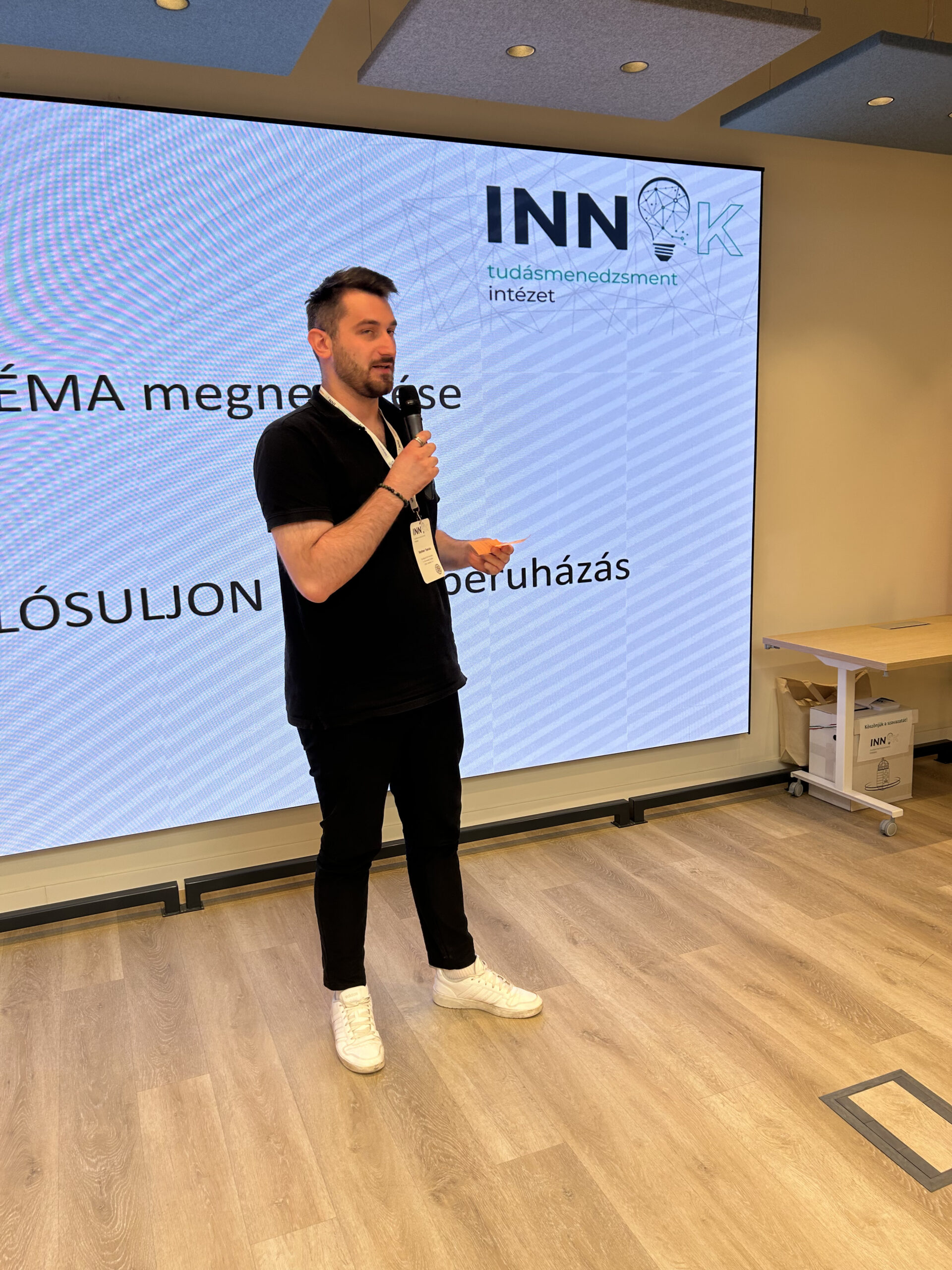
Snapshots from the assembly
Would you like to take part in the next assembly?
Register in the random selection pool. The draw is random — but if you make it into the sample, we'll let you know.