

Participatory processes
We work with local governments, institutions and civil society organisations to ensure that the people affected have a voice in the decisions that shape their communities.
What we do
We don't just collect opinions — we help to shape the decision
Citizen engagement most often fails because it starts too late. Once a plan is finished, consultation becomes a box to tick rather than a chance to shape the outcome. Residents feel shut out, and decision-makers struggle to build genuine support.
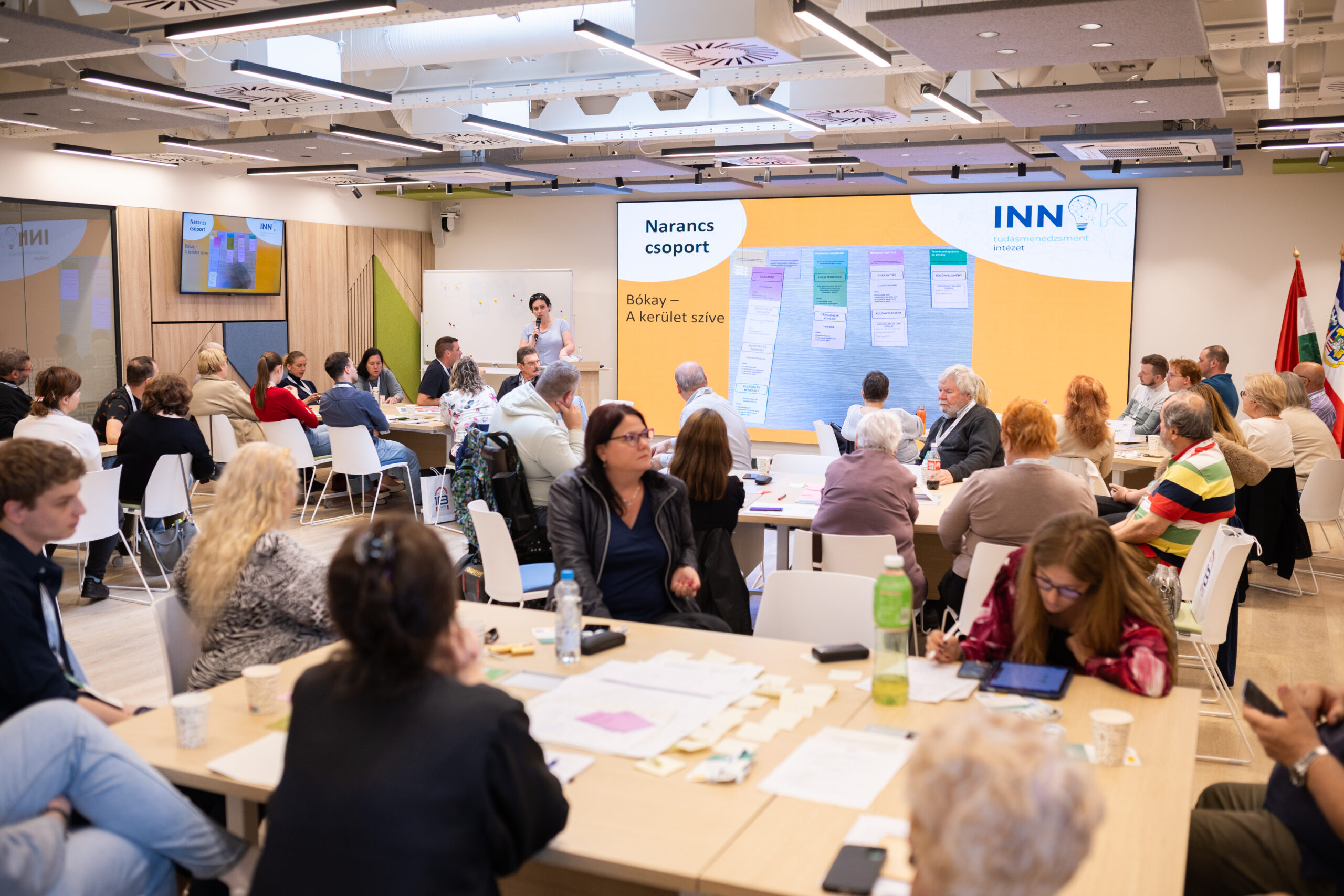
We step in while the question is still open. Our services may differ in scale and format, but they follow the same principle: bring in those who are affected, give them the information they need, and make sure their input has an impact on the decision.
Our services
Three methods, one logic
Organising a citizens' assembly
Our most complex method. Randomly selected residents, over a few sessions and with expert support, jointly form their position on a specific question, then issue a written recommendation.
What the process includes
- Framing the question together with the decision-maker so it can properly be answered
- Stratified random sampling: 60-80 people who mirror the given district or municipality by age, gender and place of residence
- Compiling balanced background material, drawing in several viewpoints
- Expert lecture and moderated deliberative debate
- A written recommendation with full documentation
- Public feedback and follow-up: what was implemented, what wasn't, and why?
Using Qualitative Research to Support Participatory Processes
Through focus groups and in-depth interviews we uncover stakeholders' experiences, needs and perspectives, to prepare participatory processes.
What the process includes
- A research plan and the definition of the target groups
- Recruiting participants, including the groups that are hard to reach
- Drawing up a discussion guide, running moderated conversations
- Transcripts and analysis
- A research report with a summary for decision-makers
Moderation and facilitation
Discussions involving multiple parties can often become tense; this is when we step in with impartial moderation and facilitation to prevent the conflict from escalating.
What the process includes
- A preliminary situation assessment: who the actors are, what is really at stake
- Designing the script for the conversation
- Impartial moderation to resolve a win-win situation
- A written record and the documentation of the agreement
- If needed, support through a multi-round process
Who it's for
Who can benefit from our services?
Local governments
District and municipal decisions, development plans, budget frameworks — where public legitimacy is a condition of success.
Institutions
Schools, cultural and healthcare institutions where involving users leads to a better service.
Civil-society organisations
Advocacy and community organising, where the voice of the membership or the local community must be represented authentically.
How the collaboration works
How does a joint project start?
Getting in touch
Write, or call. You tell us what decision you're facing.
Situation assessment
Together we clarify what the real question is, and how open it still is.
Proposal
A written offer: which tool, on what schedule, at what cost.
Delivery
We run the process, you make the decision. The roles stay clear throughout.
Feedback
A public response to the recommendations — without it the whole thing loses its point.
Frequently asked questions
maybe your question has already been answered
How long does a citizens' assembly take?
The assembly itself is typically a single weekend session, but the full process — from framing the question to public feedback — is four to six months. Its length is set mainly by how much background material has to be compiled and how divisive the topic is.
What if the assembly proposes something we can't implement?
That's natural, and it's not a problem. The assembly doesn't make a binding decision — it formulates a recommendation. The commitment isn't that you implement everything, but that you respond publicly to every recommendation: what gets implemented, what doesn't, and why not.
Experience shows, in any case, that well-informed participants make more realistic proposals than decision-makers expect — because they see the constraints too.
Won't loud activists hijack the process?
That's exactly what random selection protects against. An open forum is attended by those who have a strong opinion and the time to spare — but a citizens' assembly includes whoever the sortition selected. That way the group also contains those who would otherwise never speak up.
Why do participants receive a gift voucher?
Because without it, only those with the free time could take part. The gift voucher isn't payment for the "right answer" — it offsets the fact that someone devotes their weekend to the community's cause. Without it the sample would inevitably skew towards the better-off.
What does it cost?
It depends on the tool and the scale: a focus group and a months-long citizens' assembly differ by orders of magnitude. After the situation assessment we provide a written offer that itemises every cost. Get in touch, and let's talk it through.
Not sure which solution is right for you?
Share your challenge with us, and we will help you find a solution — even if our service is not the best fit for you.